WFIEd Holds 2026–2035 Strategic Planning Meeting in Malang: Reinforcing Commitment to Global Inclusive Education
Malang, July 22, 2025 — The World Forum for Inclusive Education (WFIEd) successfully held its Strategic Planning Meeting for the 2026–2035 period at Swiss-Belinn Hotel, Malang, Indonesia. This meeting marked a pivotal moment in shaping WFIEd’s strategic direction toward advancing truly inclusive, equitable, and sustainable education.
The event opened with remarks by the host, Eka Puput Puspitasari, S.Pd, followed by an inspiring address from Prof. Dr. Hariyono, M.Pd, a member of the WFIEd Advisory Board. In his speech, he emphasized the importance of understanding inclusivity in a broad and holistic way.
“Indonesia is a nation rooted in spirituality. But in the spirit of inclusiveness, we must go beyond singular boundaries and create space for all differences. WFIEd is not only a critical institution toward its external environment but also self-reflective. Inclusivity must start from the smallest spaces—even within the family,” Prof. Hariyono stated.
He also invited participants to explore WFIEd’s potential for influence across social, political, economic, and spiritual domains, all of which can serve as key entry points to strengthen the organization’s impact on society.
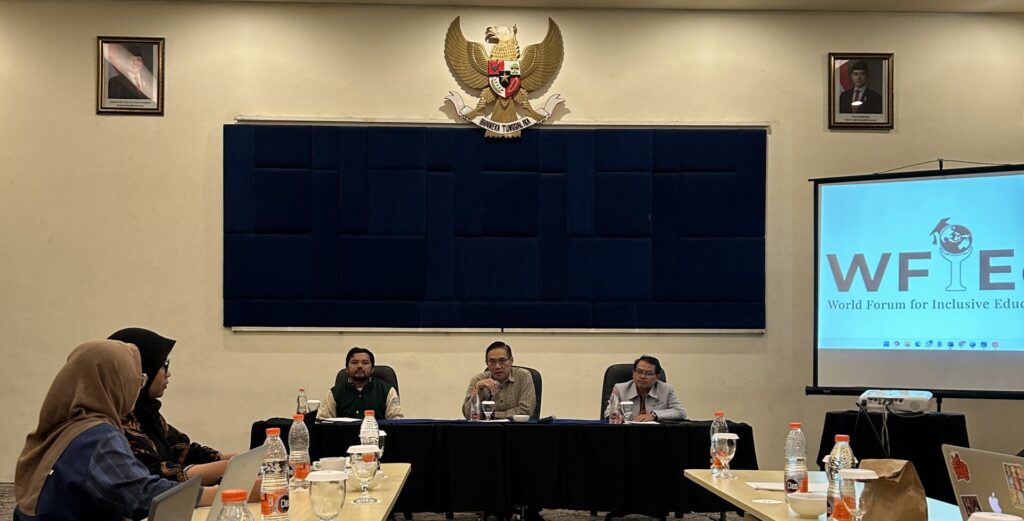
The next session was led by Prof. Dr. Adi Atmoko, M.Si., M.Pd, also from the Advisory Board, who stressed the importance of crafting concrete and systematic operational strategies.
“We must immediately map WFIEd’s activities and determine the most relevant approaches—whether social, religious, or both—while adhering to Indonesia’s regulations,” he explained.
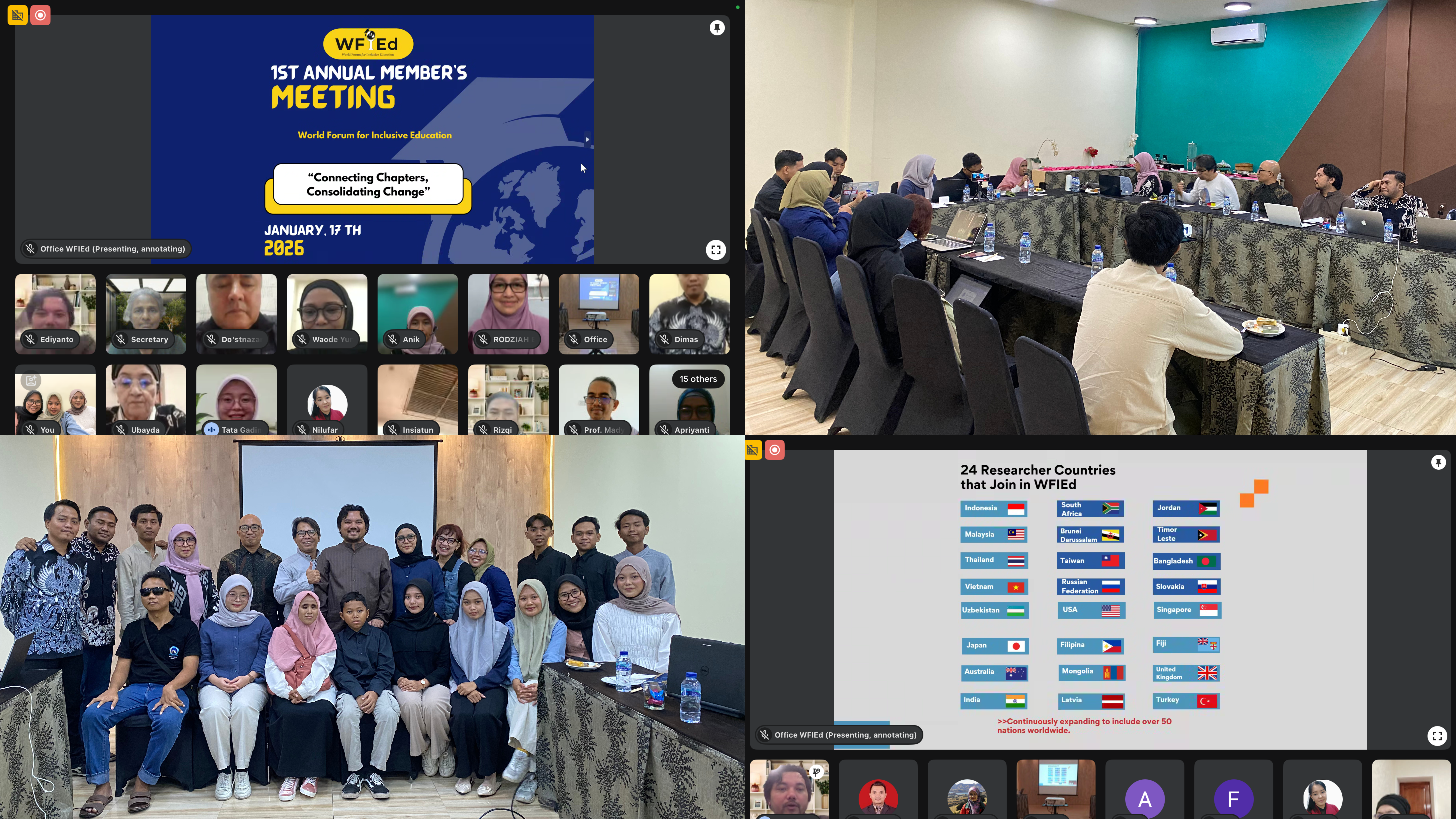
In the main session, WFIEd President Ediyanto, M.Pd, Ph.D, presented the organization’s strategic plan for the upcoming decade. Among the short-term programs set for implementation are the Annual Member Meeting and a series of Focus Group Discussions (FGDs) currently under careful planning with the team. The President called on all members to actively participate in program development to ensure each initiative responds to real field needs and aligns with the vision of Education for All.
The discussion session was vibrant and engaging, with all WFIEd members offering input, ideas, and constructive feedback to reinforce the organization’s direction. A key moment during the meeting was the presence of Mrs. Terry Beauford, a representative from the United Nations Headquarters, who contributed valuable strategic insights.
“WFIEd deserves strong support. Encourage governments to create co-funding schemes—such as teacher training scholarships supported 50% by the state. Indonesia does not lack smart people, but many still lack access to appropriate training. Most importantly, help parents understand that it’s okay to acknowledge their child needs special attention,” Mrs. Terry said.
She also stressed the importance of empowering educators to recognize and respond to each child’s needs both personally and professionally.
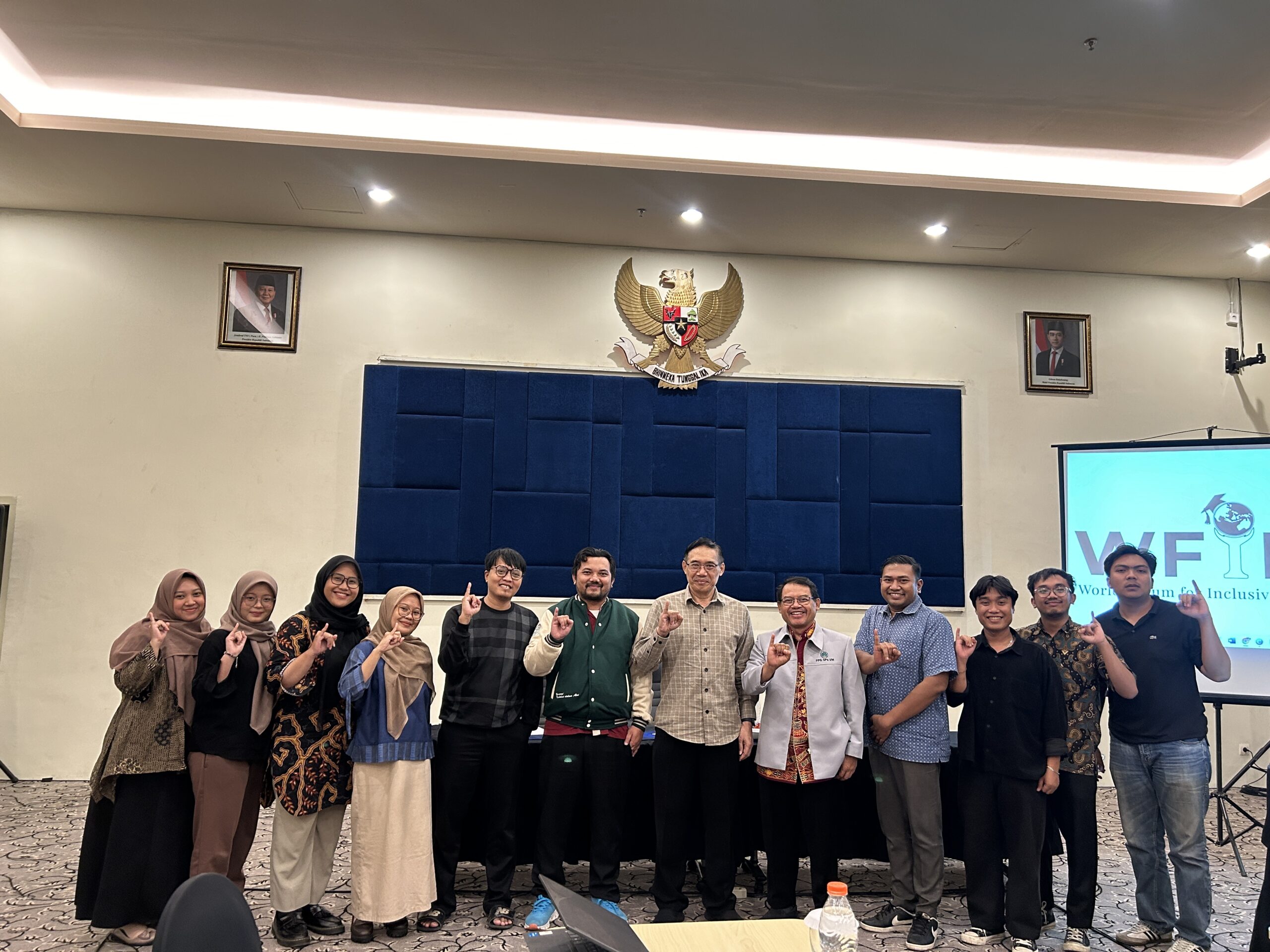
The meeting concluded with a joint commitment from all participants to begin implementing the outlined work plans. The discussion flowed smoothly, filled with enthusiasm, serving as a space for reflection and cross-sector collaboration. WFIEd reaffirmed its mission to pursue Education for All—not merely as a slogan but as a living principle, embodied in policies, programs, and practices on the ground. WFIEd invites all stakeholders—from government, academia, and the international community, to civil society—to collectively create a world where every child, without exception, has equal rights and access to meaningful education.